Is Going In The Pantheon Worth It?
An honest answer to whether going inside the Pantheon is worth it: what it costs, what you actually see, when it is free, and how to fit it into a free day in Rome.
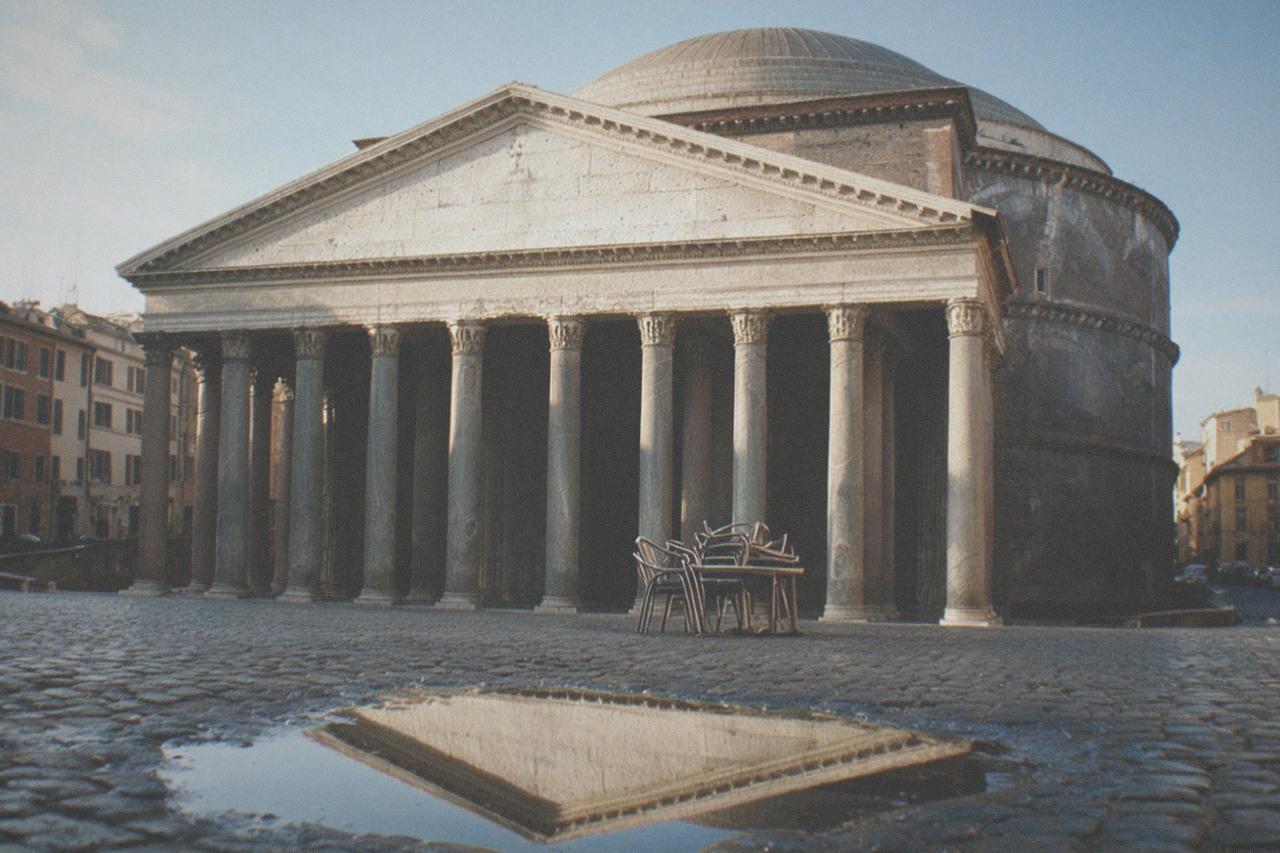
Is Going In The Pantheon Worth It?
Yes, going inside the Pantheon is worth it, and it is not a close call. It is the best-preserved building from ancient Rome still standing, the dome was the largest in the world for well over a thousand years, and the interior is free during Mass, free for under-18s of any nationality, and free for everyone on the first Sunday of the month. Even on a paid day it is one of the cheaper major sights in Rome.
The case starts with what the building is. The Pantheon was rebuilt under the emperor Hadrian in the second century, and unlike almost every other ancient monument in the city it never became a ruin. It has been in continuous use since antiquity, first as a Roman temple and, since the seventh century, as the church of Santa Maria ad Martyres. That continuity is why the dome, the marble floor, the portico columns and the bronze doors are originals rather than reconstructions. The Colosseum is magnificent but it is a shell; the Pantheon is a finished building you walk into. A free walk covers this ground: Two-Hour Highlights Walk.
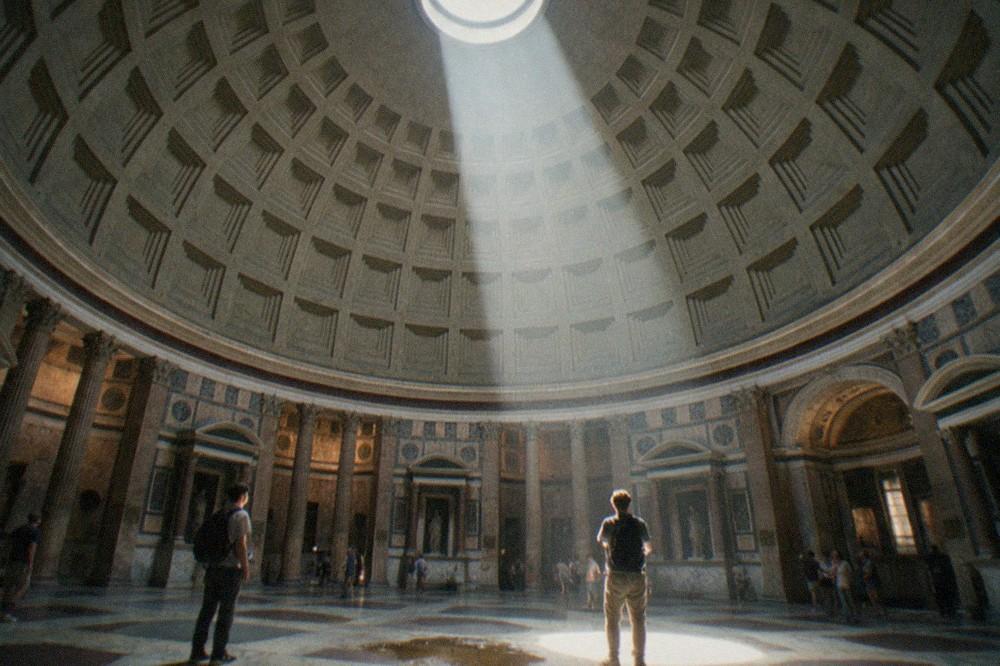
The dome itself is the reason most people remember the visit. It is a perfect hemisphere of unreinforced concrete with a nine-metre oculus open to the sky at its centre, and it has stood for nearly nineteen centuries without collapsing. Standing under it, watching the light fall through the oculus and move across the coffered ceiling, is the single most impressive free interior moment in central Rome. On a rainy day you can watch the rain come through the opening and drain away through holes cut in the floor by the ancient builders.
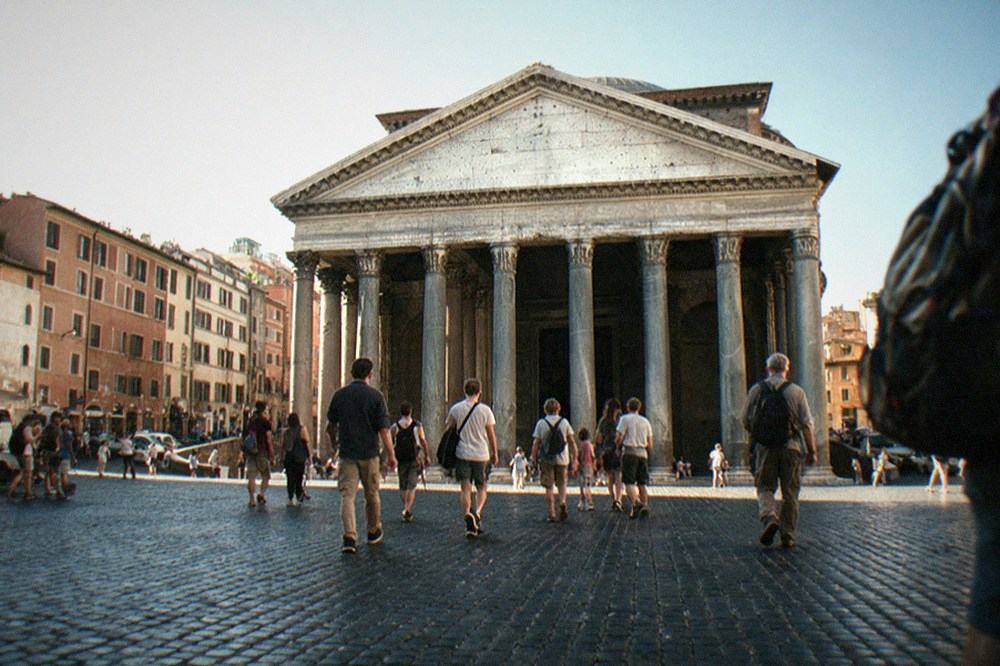
There is a practical argument too. The Pantheon sits in Piazza della Rotonda, a free public square in the middle of the historic centre, and it is surrounded by other free sights: the Trevi Fountain a few streets away, Piazza Navona, the church of San Luigi dei Francesi with three Caravaggio paintings, and Sant'Ignazio with its famous false dome. A walk that strings these together costs nothing at all, and a guided version of exactly that circuit exists as a free, pay-what-you-want walking tour on GuruWalk. The 11 Spots, 2 Hours 45 walk is rated 4.95 across 6,498 GuruWalk reviews, runs in English, and meets at Piazza di S. Marco, 48, beside Piazza Venezia before covering the Pantheon, the Trevi Fountain and the other headline squares on foot.
The honest counterargument is crowds and brevity. The Pantheon recorded 4,086,947 visitors in 2024, ranking it fourth among Italy's most-visited paid state sites, and the space is a single round room. On a summer afternoon you will share it with several hundred people, and the visit itself, if you do not linger, can be short. Some travellers conclude that seeing the exterior and the portico is enough. That judgment is defensible, but it misses the one thing the exterior cannot give you: the scale of the dome from underneath. Nobody who has stood under it describes the interior as optional. One of the free walking routes passes through here: Bilingual Secrets Of Rome.
How Much Does It Cost To Go Inside The Pantheon?
Entry to the Pantheon is ticketed, and this site does not publish a price for the ticket because no official page currently confirms one. What is confirmed is the free side: anyone under 18, of any nationality, enters free; everyone enters free on the first Sunday of the month, collecting a ticket on site; and the basilica is free during Mass and other liturgical activity. Hours are 09:00 to 19:00 daily.
The ticketing situation deserves a plain explanation. The Pantheon moved from free entry to a paid ticket model in 2023, and the standard price has been the subject of reported changes since. The Ministry of Culture's own page, which is the authority on the subject, could not be re-read at the last research pass, so the honest position is: expect to pay a modest amount, check the price on the official ticketing channel before you go, and know the free routes in cold. The basilica's own information site publishes the current opening hours and ticketing details.
The free routes are solid enough to plan a whole trip around. The under-18 rule is the strongest: the Ministry of Culture states it with no nationality condition, so an American, British, Australian or Japanese teenager enters free on exactly the same terms as an Italian one. The first Sunday of the month rule is national and verified: free tickets are collected on site at the cash desks and the automatic totems, not booked online, and the Ministry warns that the free ticket gives no priority access. And during Mass, when the basilica is open for worship, entry is free, with Mass at 17:00 on Saturdays and days before holidays and at 10:30 on Sundays and holidays.
| Route in | Who qualifies | How it works |
|---|---|---|
| Under 18 | Any nationality, no conditions | Free ticket, under-12s accompanied |
| First Sunday of the month | Everyone | Free ticket collected on site at cash desks and totems, no online booking, no priority access |
| During Mass | Everyone | Basilica open for worship at no charge, ticket sales stop an hour before |
| EU school groups | School groups from the EU | Free with no booking |
A few mechanics matter whichever route you take. Access is in time slots between 09:00 and 18:00, capped at 1,200 people per slot, with last entry at 18:30 and ticket desks closing at 18:00. There is no skip-the-line option at the Pantheon at all, so anyone selling one is selling nothing. The Ministry also publishes a dress code: shoulders covered, no shorts or very short skirts, no low-cut or transparent clothing. It is a working basilica, and it closes to visitors on 25 December and 1 January, with the basilica's own site also listing 15 August.
If you would rather have the Pantheon explained than simply walk into it, a free walking tour solves both problems at once, since the guiding is pay what you want and the walk covers the surrounding squares in the same circuit. The Two-Hour Highlights Walk from Campo de' Fiori, rated 4.9 across 722 GuruWalk reviews, is the shorter English-language option that includes the Pantheon stretch of the centre.
What Do You Actually See Inside The Pantheon?
Inside you see the original Roman interior: the unreinforced concrete dome with its oculus, the coloured marble floor laid in the second century, the giant granite columns, the bronze doors, and the tombs of Raphael and two Italian kings. It is one round room, and everything in it is visible in a single slow circuit. There is no museum, no audioguide desk of note, and no roped-off sections.
Start by looking up, because the dome is the sight. It spans the same distance as its height, making a perfect sphere, and the oculus at its centre is the building's only source of light. The coffers get smaller as the dome rises, a trick that makes the ceiling look lighter and higher than it is. Engineers still study the concrete mix, which the Roman builders varied by layer, denser at the bottom and lighter near the top, and the fact that it has survived earthquakes and nineteen centuries of weather without steel reinforcement.
Then look down. The floor is original Roman work, a pattern of coloured marbles, porphyry and granite in squares and circles, with a slight convex curve so rainwater running in through the oculus drains to the edges. The drainage holes are ancient and still functioning. Most visitors walk straight over two thousand year old paving without noticing it, which is itself a comment on how well the building works.
The walls hold the later layers of the building's life. Raphael is buried here, in a tomb with a Latin inscription by Pietro Bembo, and so are King Vittorio Emanuele II and King Umberto I. There are chapels, altarpieces and a succession of Renaissance additions, but the impression that stays with most visitors is not the art, it is the architecture. The interior is a machine for making you feel the scale of Roman engineering.
A guide changes this part of the visit considerably. The building looks self-explanatory and is not: the story of why the dome stands, what the inscription on the portico actually claims, and how the building survived by becoming a church are the difference between ten minutes and forty. This is why a free, pay-what-you-want walk is such a good fit for the Pantheon specifically. The Colosseum Walk, Bilingual, 1 Hour 45 option, rated 4.88 across 1,463 GuruWalk reviews, covers the other end of ancient Rome if you want the engineering story continued.
When Is The Pantheon Free, And When Should You Go?
The Pantheon is free for everyone on the first Sunday of each month, free for under-18s of any nationality on any day, and free during Mass. The best ordinary visiting time is early morning soon after the 09:00 opening, or late in the day toward the 18:30 last entry, when the crowd thins and the light through the oculus is at its most dramatic. One of the free walking routes passes through here: Bilingual Center Walk, 2 Hours 15.
The first Sunday deserves its own warning, because "free" does not mean "quiet". Free tickets are collected in order of arrival, there is no booking and no priority lane, and the first-Sunday crowds at Italy's most-visited sites are famously heavy. The Pantheon's 1,200-per-slot cap keeps the interior from becoming dangerous, but it also means you may wait. Arriving early is the only lever you control. The same logic applies to the free last Sunday of the month at the Vatican Museums, a different scheme entirely, which travellers often confuse with the Pantheon's first-Sunday rule; the two never coincide.
For a fuller picture of Rome's free days, including which museums are covered and which are excluded, see the guide to free Sundays in Rome, and for the Pantheon's own rules in detail, the companion guide on whether the Pantheon is free.
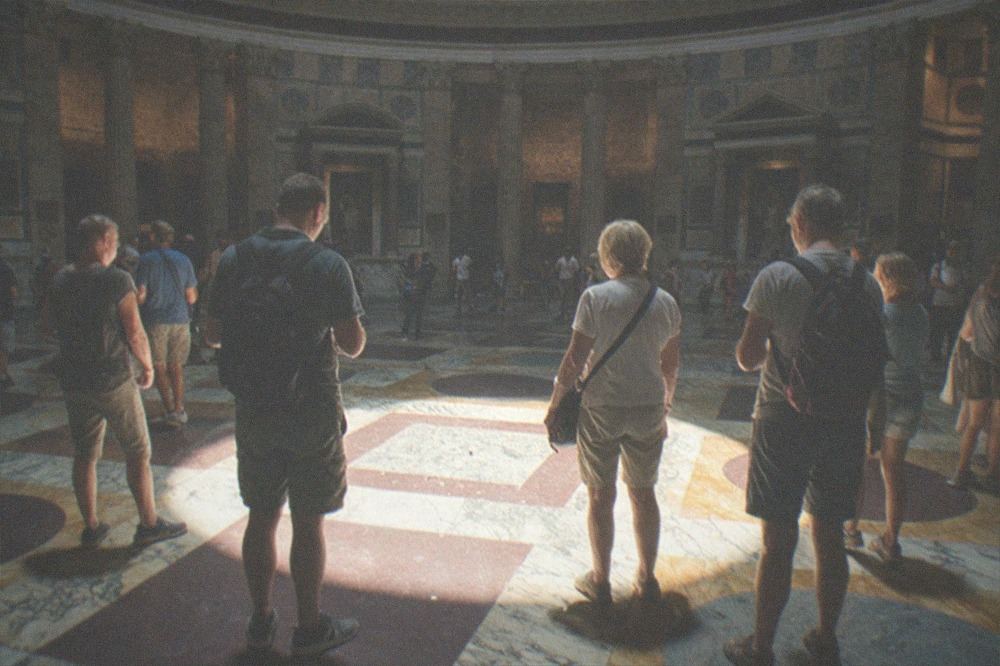
Midweek mornings outside the free day are the sweet spot for a paid visit. The building opens at 09:00, the tour groups tend to arrive mid-morning, and the hour before closing has the best light, when the beam from the oculus drops low and orange across the dome's interior. Avoid the hour either side of noon in summer, both for crowds and for heat, since the square outside offers little shade and the queue stands in it.
Rain changes the visit rather than ruining it. Water falls through the oculus in a visible column, the ancient floor drains it away, and the atmosphere inside is unlike anything else in Rome. If you get a rainy hour in the centro storico, spend it here.
What Else Is Free Around The Pantheon?
Within a short walk of the Pantheon you can see the Trevi Fountain from the square for free at any hour, Piazza Navona, Campo de' Fiori, the Spanish Steps, the church of San Luigi dei Francesi with three Caravaggios, and Sant'Ignazio with its painted false dome. All of them cost nothing, and together they make the single best free walking circuit in Rome. One of the free walking routes passes through here: Two-Hour Highlights Walk.
The Trevi Fountain needs its caveat stated precisely, because it changed in 2026. Since 2 February 2026, non-residents pay EUR 2 to enter the inner perimeter right at the basin, daily from 09:00 to 22:00, and the charge stays in force on the first Sunday of the month. But the fountain itself remains free to see from the square at any hour, and free to everyone after 22:00. Piazza di Trevi averages 30,000 visitors a day with peaks of 70,000, which is the crowding the city cited when it introduced the ticket. Do not let the EUR 2 change your plans; it buys the closest terrace, not the view.
The churches are the underrated half of this circuit. San Luigi dei Francesi, two streets from the Pantheon, is free with no ticket and holds three Caravaggio paintings in the Contarelli Chapel, and the parish publishes a free QR audio guide for them. Sant'Ignazio di Loyola is free, open daily 09:00 to 23:30, and its rectory explicitly warns that agencies charging for entry are not acting for the church; its most famous feature, the false dome painted on a flat ceiling, costs nothing to see. For a full rundown, see the guide to free churches in Rome. A free walk covers this ground: Caravaggio Mystery Walk, English.
This is also where a guided free walk earns its keep, because the circuit is easy to walk but hard to narrate. The Bilingual Center Walk, 2 Hours 15, rated 4.82 across 1,529 GuruWalk reviews, meets at Foro Traiano 89 and covers the ancient centre and the Pantheon area in English and Spanish, pay what you want at the end.
Is The Pantheon Worth It Compared With The Colosseum And The Vatican?
If your time or budget only stretches to one ancient sight, the Pantheon is the better free-or-cheap choice: it is intact, central, quick to visit and free on more days. The Colosseum is the more dramatic ruin and needs half a day; the Vatican Museums need a full morning and are only free on the last Sunday. The Pantheon is the one you can fit into any day, including a rainy one.
The comparison is not really about quality, since all three are extraordinary. It is about cost and friction. The Colosseum park's free first Sunday works differently: tickets are handed out in order of arrival at the ticket office in Piazza del Colosseo, cannot be booked online, and the free ticket excludes the arena floor, the underground, the upper levels and the panoramic lift. The Vatican Museums' free last Sunday is walk-in only, 09:00 to 14:00 with last entry 12:30, and does not run when it falls on Easter Sunday, 29 June, 25 or 26 December or 31 December. The Pantheon's free routes, by contrast, run every month and some of them every day.
Combining them is the obvious move, and a free walking tour is an efficient way to do the outdoor half of it. The Colosseum Walk, Bilingual, 1 Hour 45, rated 4.88 across 1,463 GuruWalk reviews, covers the ancient city end, while the 11 Spots, 2 Hours 45 walk handles the Pantheon and the squares. Doing both walks plus a free first Sunday at the Pantheon gives you most of Rome's headline ancient and baroque sights for the price of two tips. This stop sits on a free walking route, 11 Spots, 2 Hours 45.
One last consideration for evening planners: the Pantheon closes at 19:00, but the square around it does not, and Piazza della Rotonda after dark, with the fountain and the illuminated portico, is one of the better free night views in the centre. For more ideas along those lines, the site's guide to free things to do in Rome at night covers what stays open late. As Free Things To Do In Rome keeps finding, the trick in this city is rarely finding free things; it is sequencing them so you are not backtracking across the centro storico all day.
Common Questions About Going Inside The Pantheon
Is Going In The Pantheon Worth It?
Yes. It is the best-preserved building of ancient Rome, the interior dome is the most impressive free-or-cheap sight in the centre, and it is free for under-18s, free on the first Sunday of the month, and free during Mass. Even on a paid day it is one of the cheaper major sights in Rome.
Can you see the Pantheon for free?
Yes, under three conditions: anyone under 18 of any nationality enters free, everyone enters free on the first Sunday of the month by collecting a ticket on site, and the basilica is free during Mass, at 17:00 on Saturdays and 10:30 on Sundays and holidays.
How long does a visit to the Pantheon take?
Most visitors spend between twenty and forty minutes inside. It is one round room, so there is no route to follow, but the dome, the original floor, Raphael's tomb and the ancient bronze doors reward a slow circuit. Arriving right after the 09:00 opening gives you the quietest interior.
Is there a dress code at the Pantheon?
Yes. The Ministry of Culture publishes one: shoulders covered, no shorts or very short skirts, and no low-cut or transparent clothing. The Pantheon is a working basilica, and the code is enforced at the entrance.
Can you skip the line at the Pantheon?
No. There is no skip-the-line option at the Pantheon at all, and the Ministry states that even the free first-Sunday ticket gives no priority access. Anyone selling skip-the-line Pantheon entry is selling something that does not exist.
Is the Pantheon better than the Colosseum?
They do different jobs. The Pantheon is intact, central, quick to visit and free on more days; the Colosseum is a far larger ruin that needs half a day and a timed ticket. If you can only fit one ancient sight into a short or tight-budget trip, the Pantheon is the more efficient choice.