What Are Some Hidden Gems I Can See For Free In Rome?
Rome's overlooked free sights: the Gianicolo cannon, the Aventine keyhole, the Purgatory museum, the nasoni fountains and the quiet streets most visitors never find.
Rome's headline sights have a way of swallowing a whole trip. The queues at the Colosseum, the crush at the Trevi Fountain, the security line at St Peter's: all worthwhile, and all capable of eating three days. But the city keeps a second layer of sights that cost nothing, sit minutes from the crowds, and are missed by most of the 22,965,222 visitors who arrived in 2025. Some are official free attractions with published hours. Others are simply public space, a fountain, a street or a doorway, that nobody thought to put on a ticket.
This page collects the ones worth walking to, with the conditions attached to each. Because in Rome in 2026 "free" is a word that needs checking: the Trevi Fountain now charges EUR 2 at its basin for non-residents even though the view from the square costs nothing, and several museums that were free for everyone a year ago are now free for residents only. Every item below is genuinely free to see, and where a catch exists, the catch is stated in the same breath.
What Are Some Hidden Gems I Can See For Free In Rome?
The best hidden free gems in Rome are the Gianicolo hill with its noon cannon, the Aventine keyhole and Orange Garden, the Museo delle Anime del Purgatorio, the free Museo Storico della Liberazione on Via Tasso, the 2,800 nasoni drinking fountains, the Vatican Grottoes under St Peter's, and the Passeggiata del Gelsomino, a published walking route just under one kilometre beside the Vatican. Each costs nothing, and each sits within walking distance of a major sight.
That list is deliberately varied. Two are viewpoints, one is a museum most guidebooks have never carried, one is infrastructure most visitors walk past without a second glance, and one is a route the city's own tourism body publishes a length for. What they share is that the crowd density drops the moment you step off the standard itinerary, and that no part of the experience is a teaser for a paid upgrade.
A good way to find this layer of the city without hours of research is a pay-what-you-want walking walk. The walks listed on GuruWalk are run by independent local guides who are paid by tip at the end, typically 10 to 20 euros per person according to GuruWalk's own Rome guidance, and several of them deliberately route through the quiet corners rather than the postcard stops. The selection below pairs the city's most-reviewed general walks with its most atmospheric evening option.
If you would rather find these places under your own steam, the rest of this page walks through them one by one, with the official hours, the free-versus-paid boundaries and the small traps that catch visitors out. For the deeper planning picture, the guide to cheap things to do in Rome covers the low-cost layer between free and expensive.
Ghosts And Mysteries: The Hidden City After Dark
Rome's dark layer is free to walk and best seen at night: the river frontage at Lungotevere Castello, the alleys behind Piazza Navona, and the bridges where the city's ghost stories are set. A bilingual pay-what-you-want walk called Ghosts and Mysteries covers this territory in an hour and a half, rated 4.62 across 3,806 GuruWalk reviews, meeting at Lungotevere Castello 50. One of the free walking routes passes through here: Caravaggio Mystery Walk, English.
The evening ghost circuit is the most under-used free territory in central Rome. By day the stretch of river between Castel Sant'Angelo and Ponte Vittorio Emanuele II is a road with a pavement; after dark it becomes the setting of the city's best-known legends, from the ghost of Beatrice Cenci to the devilish architect stories attached to the churches on the far bank. Walking it costs nothing, needs no ticket, and is genuinely quieter than any piazza ten minutes inland.
The Ghosts and Mysteries walk is the established way to get the stories rather than just the scenery. It is bilingual in English and Spanish, runs an hour and a half, and its meeting point on the Lungotevreo puts it within easy reach of the Prati and Borgo quarters on either side of the river. The guiding is pay what you want: you book a place, walk, and tip the guide at the end.
Two practical notes for anyone building their own evening walk. The Passeggiata del Gianicolo, covered below, is published by Roma Capitale as always accessible with free entry, so it works as a night viewpoint after a ghost walk rather than before one. And Sant'Ignazio di Loyola, a church with one of the strangest free interiors in the city, stays open until 23:30 every day, which makes it the one major Roman church you can genuinely walk into late.
Free Viewpoints Most Visitors Never Climb
Three free viewpoints sit within a short walk of each other on the Janiculum and Aventine hills: the Passeggiata del Gianicolo, published by Roma Capitale as always accessible and free, the Giardino degli Aranci, a gated garden of 7,800 square metres with seasonal hours, and the Aventine Keyhole at Piazza dei Cavalieri di Malta, free and available at any hour. A cannon on the Gianicolo has fired at noon daily since 1904.
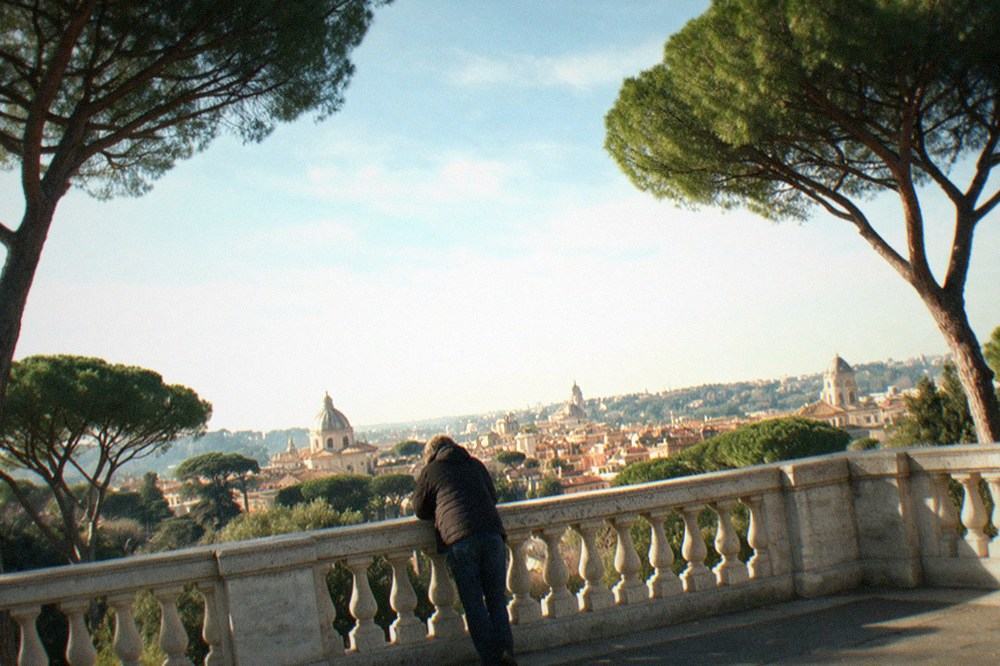
The Gianicolo is the biggest of the three and the easiest to fold into a Trastevere visit. Roma Capitale's own service page for the Passeggiata del Gianicolo records it as 60,000 square metres in Rione XIII, always accessible, with free entry, holding the Fontana dell'Acqua Paola, the busts of the Garibaldini who defended Rome in 1849, a children's carousel and even a puppet theatre, the Teatrino dei Burattini. Under the belvedere, three soldiers load a blank howitzer round and fire a single shot at noon, every day, a time-signal tradition the Sovrintendenza Capitolina dates to 1904; the city renewed the agreement with the army for the service in March 2025, so it is current, not folklore. The full detail on the hill and its neighbours is in the guide to free things to do in Trastevere. A free walk covers this ground: Ghetto And Trastevere, English.
The Giardino degli Aranci on the Aventine is a different animal: genuinely gated, with real seasonal hours, October to February 07:00-18:00, March and September 07:00-20:00, April to August 07:00-21:00. It was laid out in 1932 by Raffaele de Vico on the site of a thirteenth-century fortress. One correction worth carrying: the garden faces the Tiber, Trastevere and the St Peter's side, not the Circus Maximus, which sits on the opposite flank of the hill. Plenty of pages pair the two wrongly.
The Aventine Keyhole needs no hours at all. Looking through the keyhole of the Villa del Priorato di Malta's door, from the public square, frames the dome of St Peter's through a garden avenue. It is free, unticketed and, in the Order of Malta's own words, visited by Romans and tourists at all hours of the day and night. Entering the garden itself is a separate, reservation-only visit whose price is not published, so treat the keyhole as the free thing and the garden as something to enquire about. More viewpoints across the city are catalogued in the best free views in Rome.
Small Museums Almost Nobody Lists
Four small Rome museums cost nothing to enter: the Museo delle Anime del Purgatorio inside the church of Sacro Cuore del Suffragio, the Museo Storico della Liberazione on Via Tasso, and, among civic museums, the Museo della Repubblica Romana and the Museo delle Mura, two of only four civic sites still free for everyone after the February 2026 pricing change. None needs a ticket.
The strangest of them is the Museo delle Anime del Purgatorio, a single corridor of scorched handprints, singed prayer books and fire-marked bed linens collected as alleged evidence of souls in purgatory. It sits inside the church of Sacro Cuore del Suffragio on the Lungotevere Prati, is free, and is open during church hours. It is small enough that it costs twenty minutes, and unusual enough that nobody who visits forgets it. The rest of the planning pages sit on Free Things To Do In Rome.
The most serious is the Museo Storico della Liberazione at Via Tasso 145, in the building the Gestapo used as a prison during the occupation of Rome. The Ministry of Culture's page for the museum records it as free for everyone, open daily 09:00 to 19:00, closed around Christmas, Easter and mid-August, with booking required only for groups over six. The cells, with prisoners' graffiti still on the walls, are the point. It is a heavy hour, and a genuinely important one, and almost no free-things listicle carries it.
The civic picture needs care. Since 1 February 2026, Roma Capitale's museums are free for residents of Rome and the Città Metropolitana with ID, and paid for everyone else, with exactly four exceptions that remain free to all: the Museo della Repubblica Romana e della Memoria Garibaldina at Porta San Pancrazio on the Gianicolo, the Museo delle Mura at Porta San Sebastiano, the Museo di Casal de' Pazzi and the Casa Museo Alberto Moravia. Two of those four double as hidden gems in their own right: the Repubblica Romana museum caps a Gianicolo viewpoint, and the Museo delle Mura sits inside the Aurelian Wall by the Appia, where you can walk the ancient rampart for free.
One more free interior that belongs on this list, even though it is a building rather than a museum: the Tempietto del Bramante on the Gianicolo slope at San Pietro in Montorio, run by the Real Academia de España and free with no ticket, Tuesday to Sunday 10:00-18:00 with last entry 17:30. It is a small, near-perfect Renaissance round temple, and the Academia's own page states the free access outright.
Churches With Hidden Interiors
Several free Roman churches hide their best sights in plain sight: Sant'Ignazio's painted false dome, open free until 23:30 daily, Michelangelo's Moses in San Pietro in Vincoli, free with no ticket, the Cavallini frescoes at Santa Cecilia in Trastevere, viewable only in a narrow weekday morning window, and the Scala Santa, whose Holy Stairs are free to climb while the chapel at the top costs EUR 3.50.
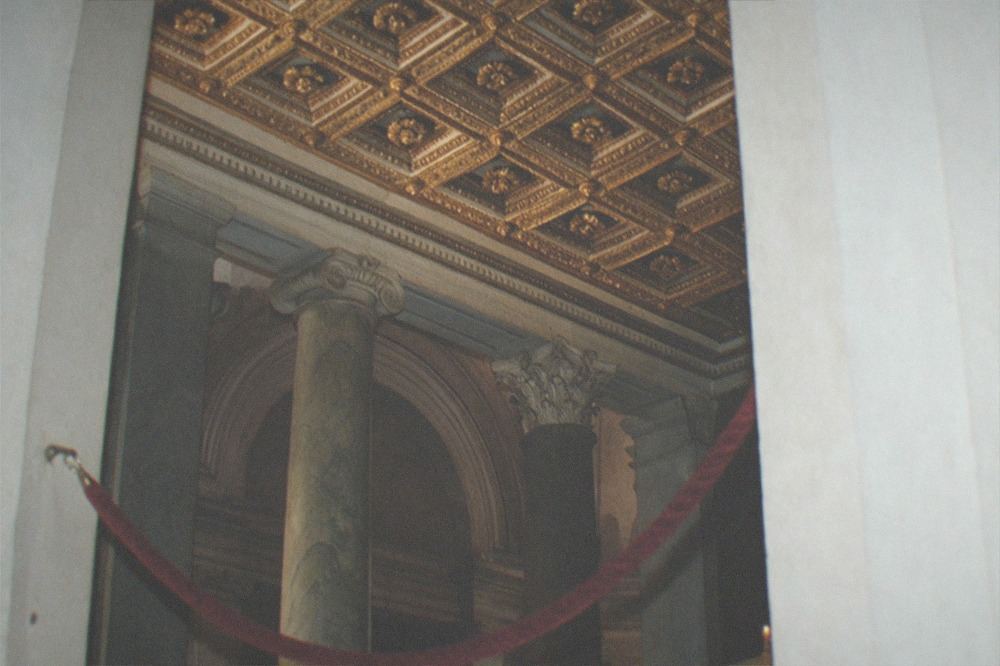
Sant'Ignazio di Loyola, two streets from the Pantheon, is the easiest hidden gem in the city: free, open daily 09:00 to 23:30, and holding a flat ceiling that Andrea Pozzo painted to look like a dome. Stand on the marble disc in the nave floor and the illusion holds; step off it and it collapses. The rectory also publishes a warning that agencies charging for entry are not acting for the church, so the free door is the official one. This stop sits on a free walking route, 11 Spots, 2 Hours 45.
San Pietro in Vincoli holds Michelangelo's Moses and charges nothing for the upper basilica, with no booking, open daily 08:00-12:30 and 15:00-18:00 in winter, to 19:00 in summer. It sits on the Esquiline, well off the standard route, which is exactly why the crowd level stays sane. The Scala Santa near San Giovanni is a similar split: climbing the Holy Stairs on your knees is free and needs no booking, while the Sancta Sanctorum chapel at the top costs EUR 3.50 full, EUR 3.00 reduced.
Santa Cecilia in Trastevere is the one to plan. The basilica itself is free, but the Cavallini frescoes are visitable only 10:00-12:30 on weekdays and 11:30-12:30 on feast days, a two-and-a-half-hour weekly window and a one-hour one, and they are separately ticketed, with the monastery publishing no price online. The monastery also states that no guided visits are scheduled for September or October 2026, that other dates need a group of at least 8 to 10, and that its guided tours are in Italian only. Getting this wrong wastes a morning, which is why it is spelled out here.
| Hidden gem | Free part | The catch | Hours |
|---|---|---|---|
| Gianicolo terrace | Whole promenade, 60,000 sqm | Steep climb from Trastevere | Always accessible |
| Giardino degli Aranci | Gated garden, 7,800 sqm | Seasonal closing times | 07:00 to 18:00-21:00 by season |
| Aventine Keyhole | The view through the door | Queue at peak times | Any hour |
| Museo delle Anime del Purgatorio | Whole corridor museum | Small, church hours only | Church hours |
| Museo Storico della Liberazione | Whole museum | Serious, not light viewing | Daily 09:00-19:00 |
| Sant'Ignazio false dome | Whole church | None, free is official | Daily 09:00-23:30 |
| Cavallini frescoes, Santa Cecilia | Basilica nave | Frescoes separately ticketed, tiny windows | Weekdays 10:00-12:30 |
| Vatican Grottoes | Papal tombs under St Peter's | Security queue for the basilica | Basilica hours |
One church-adjacent free sight deserves its own mention: the Vatican Grottoes beneath St Peter's, holding the tombs of many popes including St Peter's own, are open to the public and the visit is free, in the basilica's own words. Since the basilica itself is free of charge, with only the optional paid time-slot booking, the grottoes extend a free visit into a second level most visitors never realise exists. The full picture, including the dress code and the security checkpoint layout, is in the guide to St Peter's Basilica and what it costs. A free walk covers this ground: Small-Group Vatican, 1 Hour 30.
A pay-what-you-want walk is a good way to reach several of these in one thread. The Bilingual Secrets of Rome walk, rated 4.84 across 398 GuruWalk reviews, runs two hours in English and Italian from Piazza Venezia 16, which puts its starting point within easy reach of the Gesù, Sant'Ignazio and the Campidoglio layer of hidden interiors.
For the paintings rather than the architecture, the free Caravaggio churches, San Luigi dei Francesi among them, are covered in where to see Caravaggio in Rome for free, a route that pairs naturally with the walks above.
The Nasoni: 2,800 Fountains Most Visitors Never Drink From
Rome has 2,800 nasoni, the cast-iron drinking fountains that run continuously from pavements across the city, and the water is the same drinkable water that reaches Roman homes, under annual quality control. They are free, unmapped by signage, and the city's utility has geolocated all of them in a free app. The first was installed in 1874.
The nasoni are the most under-used free thing in Rome, precisely because they look like street furniture rather than an attraction. The name means "big noses", from the curved spout. Roma Capitale records 2,800 of them across the city, and ACEA, the water utility, has mapped the entire network plus 150,000 water points nationally in its free Waidy Wow app, which is the practical way to find the nearest one on a hot afternoon. The water is drinkable and is the same supply that reaches Roman homes, a point ACEA states explicitly.
The tradition has a purpose worth knowing. The first nasone went in under Mayor Luigi Pianciani in 1874, and when the city inaugurated three new cast-iron fountains on the Via Sacra by the Colosseum for the 150th anniversary, the stated reasons were cutting plastic, stopping irregular water selling, and giving water to everyone who was thirsty, not only tourists. Drinking from one is closer to using a public service than discovering a secret, and it is the single best way to avoid buying bottled water in a city where summer heat is a real constraint: the health ministry issued heat-risk warnings for Rome in early September 2026, and the city hit 40.1 degrees on 29 June. This stop sits on a free walking route, Colosseum Walk, Bilingual, 1 Hour 45.
One honest caveat, reported by travellers themselves rather than by any official page: some individual nasoni run dry, and some push-button models produce nothing. A specific fountain cannot be relied on, so the app's map plus a willingness to walk to the next one is the realistic method. Do not confuse them with the Case dell'Acqua, a different network of 68 drinking-water houses inside the city, which are counted separately.
Hidden Walks And Streets With Published Lengths
A few Rome walks have officially published lengths: the Passeggiata del Gelsomino beside the Vatican is a little under one kilometre, Via di San Bonaventura on the Palatine is about 300 metres of repaved pedestrian street, the Almone itinerary is just over 6 km, and the Via Appia Antica runs about 16 km inside Rome from Porta San Sebastiano. All are free to walk.
The Gelsomino walk is the hidden gem of the four. It runs beside the Vatican on the side away from the queues, is published by the city's tourism body at a little under one kilometre, and delivers angles of the basilica and the walls that the standard approach never gives. It costs nothing, needs no booking, and works at any hour because it is simply a street.
Via di San Bonaventura is the newest: roughly 300 metres of pedestrianised street on the Palatine, repaved in sanpietrini in 2026, threading along the edge of the archaeological park where you can look into the ruins without a ticket. It is the honest version of "seeing the Forum for free", because it is a public street with a view, not a loophole.
The Appia Antica is the long one, about 16 kilometres of it inside Rome from Porta San Sebastiano, and the road itself is free public highway. The distinction that matters: the open parkland is free, while the Ministry's monuments along it, Villa dei Quintili, Cecilia Metella and the rest, are ticketed, and the Tombe della Via Latina and the Complesso di Capo di Bove have been closed for restoration since 22 June 2026 with no announced reopening. Walk the road, budget for the ruins if you want them.
A final practical note on method. All the walks named on this page are pay-what-you-want listings on GuruWalk, run by independent local guides, and the tip norm GuruWalk itself publishes for Rome is 10 to 20 euros per person, with some walkers leaving up to 50. The free sights above need no guide at all, but for the ghost stories, the secrets and the layers a plaque will not explain, a tip-based walk is the cheapest guided format in the city. The wider comparison lives in are free walking tours in Rome worth it.
Common Questions About Hidden Gems In Rome
What Are Some Hidden Gems I Can See For Free In Rome?
The Gianicolo terrace and its noon cannon, the Aventine Keyhole and Giardino degli Aranci, the Museo delle Anime del Purgatorio, the free Museo Storico della Liberazione on Via Tasso, the 2,800 nasoni drinking fountains, the Vatican Grottoes under St Peter's, Sant'Ignazio's false dome and the Passeggiata del Gelsomino beside the Vatican. All are free to see, with hours or conditions noted where they apply.
Is the Aventine Keyhole really free?
Yes. Looking through the keyhole from the public square at Piazza dei Cavalieri di Malta is free, unticketed and available at any hour, day or night. Entering the Villa del Priorato garden is a separate visit arranged by reservation through the Order of Malta's Visitors Centre, and no price for it is published, so treat the keyhole view as the free experience.
Can you drink from the nasoni fountains in Rome?
Yes. The water in the 2,800 nasoni is drinkable and is the same water that reaches Roman homes, under annual quality control, according to the utility ACEA. The practical caveat reported by travellers is that some individual fountains run dry or have push-buttons that produce nothing, so use the free Waidy Wow app to find the nearest working one rather than counting on a specific fountain.
What is the strangest free museum in Rome?
The Museo delle Anime del Purgatorio, inside the church of Sacro Cuore del Suffragio on the Lungotevere Prati. It is a single corridor of scorched handprints and fire-marked objects collected as alleged traces of souls in purgatory, free to visit during church hours. For something more serious, the Museo Storico della Liberazione at Via Tasso 145 is free daily 09:00 to 19:00.
Are Rome's civic museums free for tourists?
Most are not. Since 1 February 2026 they are free for residents of Rome and the Città Metropolitana with ID and paid for everyone else, with four exceptions that stay free to all: the Museo della Repubblica Romana e della Memoria Garibaldina, the Museo delle Mura, the Museo di Casal de' Pazzi and the Casa Museo Alberto Moravia. The EUR 5 MIC card is also residents-only, so a tourist cannot buy their way in.
Do you need to book anything for these hidden gems?
Almost nothing. The viewpoints, the nasoni, the streets and the free churches need no booking at all. The exceptions are practical rather than financial: the Museo Storico della Liberazione asks groups over six to book, the Santa Cecilia frescoes run on a narrow published window, and the Piramide Cestia's free guided visits through 31 October 2026 are by reservation. Everything else is walk-up.