What Not To Do In Italy As An American
The mistakes American visitors make in Rome and Italy, from assuming landmarks are free to skipping dress codes, and how to avoid each one.
What Not To Do In Italy As An American
The biggest mistakes are assuming yesterday's rules still apply, treating churches like attractions, and showing up unprepared for heat, queues and fines. Rome changed its pricing in 2026, dress codes are enforced at St Peter's, and an unvalidated bus ticket costs EUR 104.90. None of this is hard once you know it, and most of it costs nothing to get right.
The honest starting point: Italians do not expect you to be Italian. Nobody is offended by an accent or a question asked in imperfect Italian. What actually causes friction is the handful of behaviours that read as careless rather than foreign, and most of those come from outdated guidebooks or a cousin's trip a decade ago. Rome in particular spent 2026 rewriting its own rules, so a 2024 blog post is not just stale, it is actively wrong.
Start with the way you learn the city. A free, pay-what-you-want walking tour run through GuruWalk is the cheapest possible way to absorb local norms in your first hours, because the guide is a Roman who will tell you plainly what to skip, where not to eat and how the new ticketing works. The Bilingual Center Walk, 2 Hours 15 meets at Foro Traiano and runs in English and Spanish, rated 4.82 across 1,529 GuruWalk reviews. There is also a Colosseum Walk, Bilingual, 1 Hour 45, rated 4.88 across 1,463 GuruWalk reviews, and English Ancient Rome, 2 Hours 15, rated 4.64 across 141 GuruWalk reviews, if ancient Rome is your priority. One of the free walking routes passes through here: Colosseum Walk, Bilingual, 1 Hour 45.
A common first-day error is trying to see everything between the airport and dinner. Rome recorded 22,965,222 tourist arrivals and 52,920,135 overnight stays in 2025, an average stay of 2.3 nights, so the crowds you have read about are real and permanent. Picking one neighbourhood a day beats a checklist that has you crossing the city four times. For more on whether these tours earn their tips, see are free walking tours worth it.
Don't Assume The Landmarks Are Still Free
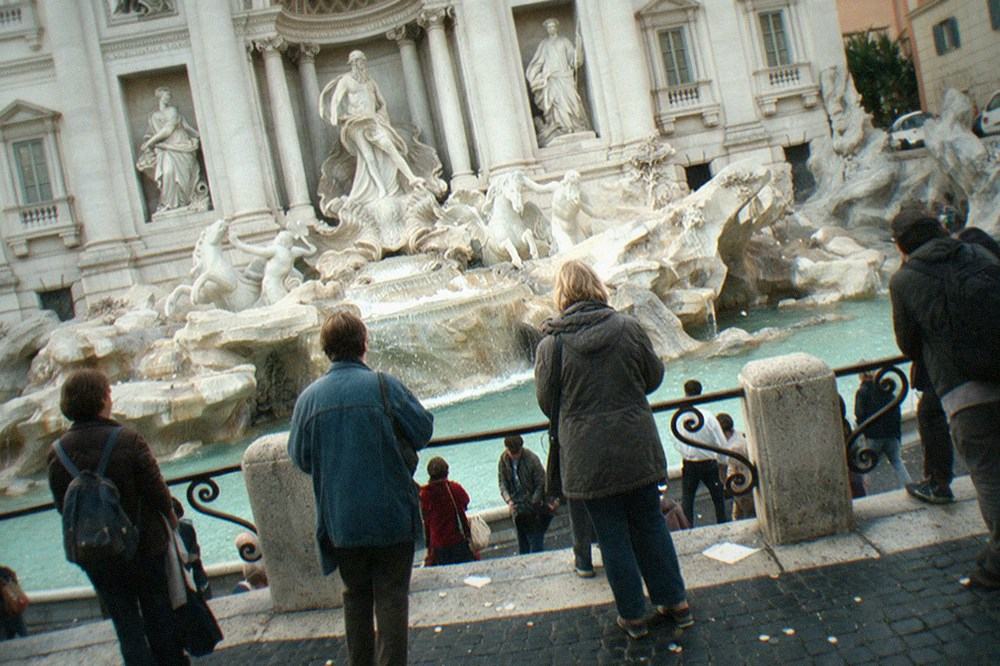
The Trevi Fountain is the headline change: since 2 February 2026, non-residents pay EUR 2 to enter the inner perimeter at the basin, and the charge applies on free Sundays too. Seeing the fountain from the square costs nothing at any hour. Five civic museum sites also stopped being free for tourists on 1 February 2026, so old lists are wrong. This stop sits on a free walking route, 11 Spots, 2 Hours 45.
The Trevi charge runs 09:00 to 22:00 daily, from 11:30 on Mondays and Fridays, and it is free for residents with ID, children under 6, people with disabilities and a companion. The city's own framing is that Piazza di Trevi averages 30,000 visitors a day with peaks of 70,000, and the ticket manages that flow. The fountain itself remains visible for free from the square, and after 22:00 the whole thing is free to everyone. Both halves of that sentence have to travel together: the fountain is not free, and it is not paid.
The same month, Rome's civic museum system changed. Twelve sites including the Capitoline Museums became free for residents of Rome and the Città Metropolitana, while five previously free sites, among them the Museo Carlo Bilotti and Museo Pietro Canonica inside Villa Borghese, moved to paid for non-residents. Exactly four civic museums remain free for everyone: the Museo della Repubblica Romana, the Museo delle Mura, the Museo di Casal de' Pazzi and the Casa Museo Alberto Moravia. The state system is a different story: state museums are free to everyone on the first Sunday of the month, which is a rule worth planning around, as our free Sundays in Rome guide explains in detail.
Do not assume free means free, either. On the first Sunday, the free Colosseum ticket is handed out in order of arrival at the ticket office and excludes the arena floor, the underground and the upper levels. The free Galleria Borghese ticket still carries a compulsory EUR 2 booking fee. And under-18s of any nationality enter every state site free, which surprises American families who budget for teenagers: the Ministry of Culture states it with no nationality condition at all. One of the free walking routes passes through here: English Ancient Rome, 2 Hours 15.
| Assumption | The 2026 reality |
|---|---|
| The Trevi Fountain is free | Free to see from the square; EUR 2 inner perimeter for non-residents |
| Civic museums have free days | Free for residents since 1 February 2026; only four are free for all visitors |
| Free Sunday covers everything | State sites yes, Vatican Museums no, and the free Colosseum ticket excludes the arena |
| Under 18s pay | Under 18s of any nationality are free at every state museum |
Don't Treat Churches Like Museums
St Peter's Basilica is free to enter, but it enforces a published dress code: long trousers for men, skirts below the knee or trousers for women, shoulders covered for everyone. Security checkpoints sit in the right side of the square, and queues at peak times are an official fact, not a rumour. The basilica's hours are 07:00 to 20:00 year round.
The code is on the basilica's own site, so there is no ambiguity to argue with at the checkpoint. The same logic applies across the city. No Rome church introduced a ticket or a compulsory reservation in 2025 or 2026, which is genuinely good news, but individual churches publish their own conduct rules: at Santa Maria del Popolo the Cerasi Chapel is metered, photography inside it is forbidden, and visits are barred during Mass. At the Scala Santa, climbing the Holy Stairs is free but the Sancta Sanctorum chapel at the top costs EUR 3.50, and shoulders and knees must be covered.
The trap Americans fall into most is the paid add-on disguised as the main event. At San Clemente, the EUR 10 ticket and the compulsory online booking are for the excavations and the Mithraeum below, not the twelfth-century church above. At St Peter's, a EUR 7 product exists on the official channel, but it buys a guaranteed time slot and an audio guide; the free walk-in queue still exists. Read what the ticket covers before assuming the church itself charges.
A short guided walk is a good way to learn these boundaries without reading ten parish websites. The Two-Hour Highlights Walk meets at Campo de' Fiori and is rated 4.9 across 722 GuruWalk reviews, pay what you want, in English.
Don't Wing It With Transport
Buses and metro in Rome are not free, and riding without a validated ticket costs EUR 104.90 in total, reduced to EUR 54.90 if paid within five days. The BIT ticket is EUR 1.50 and covers 100 minutes with one metro journey. Children up to 10 travel free with a fare-paying adult, and contactless capping means a tapping visitor cannot overpay.
That fine is the number that changes behaviour. Tickets must be validated at the start of each journey and kept for its whole duration, and inspectors do not accept "I forgot" from tourists. The contactless option is the easiest fix for Americans used to tapping a card: it charges EUR 1.50 per journey and automatically applies the EUR 8.50 daily fare after four taps within 24 hours. Day and multi-day passes rose in price on 1 July 2025 under a regional deliberation, so the Roma 24H is now EUR 8.50, the 48H EUR 15, the 72H EUR 22 and the weekly EUR 29.
| Ticket | Price | What it covers |
|---|---|---|
| BIT | EUR 1.50 | 100 minutes, one metro journey, buses, trams, urban rail |
| Roma 24H | EUR 8.50 | Unlimited travel within Rome for 24 hours |
| Roma 48H | EUR 15.00 | 48 hours, unlimited within Rome |
| Roma 72H | EUR 22.00 | 72 hours, unlimited within Rome |
Two more things worth knowing. If you are driving, the ZTL centro storico bars non-authorised vehicles Monday to Friday 06:30 to 18:00 and Saturday afternoons, and rental-car GPS will happily route you into it; the fines arrive months later. And before any travel day, the official national strike register at scioperi.mit.gov.it lists proclaimed strikes with dates and sectors, which is far more reliable than a blog's warning list.
Don't Fall For Unlicensed Guides And Ticket Touts
Unlicensed guiding is a real, policed problem in Rome, not a rumour. In September 2025 a man with a fake guide badge was fined 4,000 euros near the Pantheon; in November 2025 police stopped 20 touts near St Peter's with sanctions above 10,000 euros. Since 2023, all licensed guides must be on a national register with a QR-verifiable badge. This stop sits on a free walking route, Bilingual Center Walk, 2 Hours 15.
Since 26 August 2026, guides on the national register can carry a tesserino with a photo, an inscription number and a QR code, and the Ministry of Tourism runs a public, searchable guide list where you can verify anyone yourself. That is the practical answer to "how do I know my guide is real": check the badge, or check the register. The enforcement record suggests the risk is concentrated around the big landmarks, with golf-cart operators near the Pantheon repeatedly stopped in 2026.
Booking through GuruWalk sidesteps most of this, because listings are tied to a named guide with a public review history rather than a man with a laminated card in a piazza. Tipping norms matter here too: GuruWalk's own Rome guidance says 10 to 20 euros per person is typical, with some walkers leaving up to 50, and travellers in recent threads report 10 to 15 euros per person as the normal range. If you want the full picture, our piece on how much to tip on a free walking tour breaks it down.
Don't Underestimate The Heat And The Small Costs
Rome hit 40.1 degrees on 29 June 2026, and the Health Ministry issued heat-risk warnings into September. The city has 2,800 public drinking fountains, the nasoni, and the water is the same water that reaches Roman homes. An espresso at the bar averaged EUR 1.19 in the province of Rome in 2026, and public toilets at Termini and Piazza di Spagna cost EUR 1.
The nasoni are the single best free tool an American visitor forgets to pack for: a refillable bottle and a willingness to use a cast-iron street fountain. The first one was installed in 1874, and the city's stated reasons for keeping them running include giving water to everyone who is thirsty, not only tourists. Travellers posting online in August and September 2026 confirm most work, though some run dry, so do not bet a whole afternoon on one specific fountain.
The small costs add up differently than at home. The tourist tax, the contributo di soggiorno, runs per person per night with a ten-night cap: EUR 6 at a B&B, EUR 7.50 at a four-star hotel, EUR 10 at a five-star, and it is usually paid at the property, not included in the booking. Children under 10 are exempt, as are several other categories. Coffee standing at the bar is the local price; sitting at a table is a different product with a different price, and that is not a scam, it is the menu.
Don't Plan Like The Old Guidebooks Did
Plan around the rules that exist, not the ones you remember: first Sundays for state museums, last Sundays for the Vatican Museums, Wednesdays for the papal audience with always-free tickets. Rome is walkable precisely because its centre restricts cars, and the cheapest way to learn it is on foot with someone who lives there.
The recurring free calendar is more generous than most Americans expect. State museums are free on the first Sunday of the month. The Vatican Museums are free on the last Sunday, 09:00 to 14:00 with last entry at 12:30, walk-in with no booking, unless it falls on Easter, 29 June, 25 or 26 December, or 31 December. Papal audience tickets are always free, requested through the Prefecture of the Papal Household, and the audience is held on Wednesdays in St Peter's Square or the Paul VI Hall. That is a week's skeleton you can build a whole trip around without spending a euro on entry. This stop sits on a free walking route, Small-Group Vatican, 1 Hour 30.
This is where Free Things To Do In Rome earns its keep: the site exists because the free landscape changed so much in 2026 that a directory with current facts is genuinely useful, from the four civic museums that are still free to the churches that never charged and never will. The walks below are a good way to finish, whether you want ghosts, Caravaggio or the old Jewish Ghetto, all pay what you want and all run by independent local guides on GuruWalk.
Common Questions About Mistakes Americans Make In Italy
What Not To Do In Italy As An American?
Do not assume landmarks are still free, do not enter churches in beachwear, do not ride public transport without a validated ticket, and do not accept tours from anyone with a badge you cannot verify. The Trevi Fountain charges EUR 2 at the basin for non-residents, St Peter's enforces a dress code, an unvalidated ticket costs EUR 104.90, and unlicensed guiding is actively policed. Everything on that list is avoidable with ten minutes of planning.
Do I need to speak Italian in Rome?
No. English is widely spoken in the tourist economy, and free walking tours in English run daily through GuruWalk. Learning "buongiorno", "grazie" and "permesso" is appreciated, but nobody expects fluency, and attempting a few words is received as politeness rather than tested as a skill.
Is it rude to order cappuccino in the afternoon?
The norm is that milky coffee belongs to the morning, and an espresso after a meal is standard. A bar will still make you a cappuccino at 4pm without comment, and plenty of Romans order one too. It is a convention, not a rule, and no one is keeping score.
How much should I tip in Italy?
Service is usually included in restaurant bills, so rounding up or leaving a couple of euros is normal rather than the American 20 percent. On free walking tours, GuruWalk's own Rome guidance gives 10 to 20 euros per person as typical, with some walkers leaving up to 50 for an exceptional guide.
Are the free walking tours actually free?
The guiding is pay what you want: you book a spot at no charge and tip the guide at the end. Eight walks in Rome carry a separate out-of-pocket cost such as food, so check the listing details, but the walk itself never has a fixed price and there is no minimum tip.
What should I wear to the Vatican?
St Peter's published code is long trousers for men, trousers or skirts below the knee for women, and covered shoulders for everyone. The same standard is safe for every major Roman church. The Scala Santa additionally requires shoulders and knees covered, and its rules are enforced at the door.